Limited time The $500 Step 1 readiness call is currently free. Book yours now
One Year. One Fee. Easy as 1-2-3.
Turn your invention into a professionally drafted, expedited U.S. utility patent application: searched, written, filed, and prosecuted personally by a registered patent attorney and engineer with more than 25 years in patent law. The entire patenting process complete in about one year, for one flat fee.
Most inventors get one chance to file correctly. This process exists so you do not waste yours.
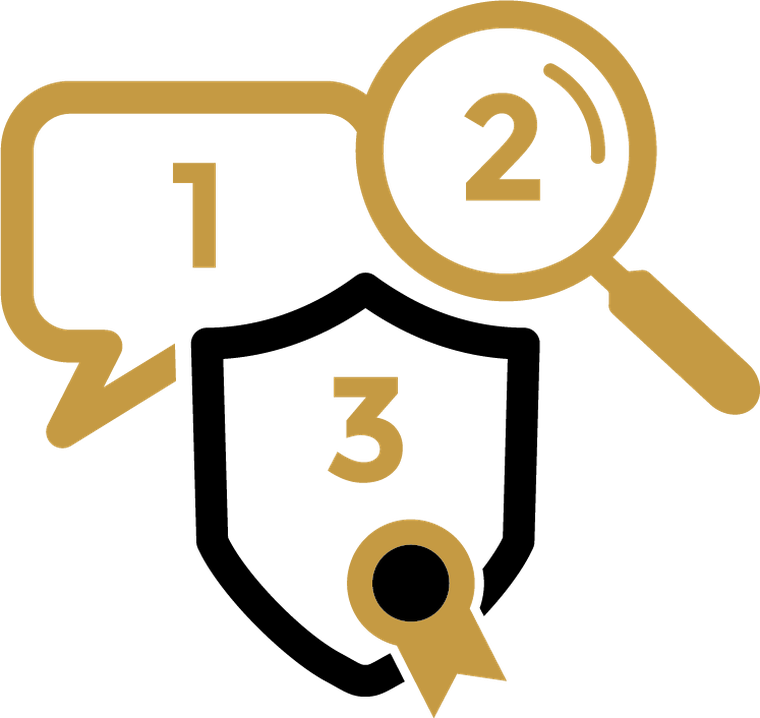
Most inventors feel overwhelmed before they begin. The fix is structure. Each step answers one question before you spend money on the next.

A one on one call, up to 60 minutes, with the attorney. We confirm your idea is the kind of invention a U.S. utility patent can protect, sort out who the true inventors are, and decide whether you are ready for a real prior art search. Bring your questions about the firm and the patent process. Answering them is part of the call.
Book Step 1 →
You upload a description and drawings through a secure portal. I personally search the worldwide prior art and prepare a detailed written analysis that culminates in a straight recommendation: Green, Yellow, or Red.
What the lights mean →
For cases that move forward, I draft your full utility application, file it under the USPTO's expedited Track One program, and prosecute it through issuance or final office action. The goal is your issued patent in hand about one year after you start. Office action responses are included, not extra. The flat fee holds.
See what is included →No search can promise an outcome at the USPTO, and you should walk away from anyone who says otherwise. What you get instead is a detailed written analysis and my professional recommendation, in writing, before you commit real money. One more thing worth knowing: most cases come back Yellow or Red. A Green light here is rare, which is exactly why it means something.
The prior art looks clear enough to justify drafting and filing, and the written analysis tells you exactly why.
Patentability is uncertain. You can proceed if the business case justifies it, and you will understand the specific risks before spending another dollar.
I recommend you do not file. The money this answer saves you is the entire point of searching first.
USPTO fees, professional patent drawings, expedited Track One filing, and every office action response your case needs. The meter never starts, because there is no meter.
Most firms quote you for drafting, then bill by the hour every time the Patent Office does anything, for years, while the application sits in a three year queue. Here the entire path is one fixed number, filed expedited under Track One and prosecuted through issuance or final office action, with the goal of your issued patent in hand about one year after you start, subject to the engagement terms. Ask any other firm to put that in writing, apples to apples. Then decide.
Pricing assumes micro entity status, which most individual inventors and small startups qualify for. What is micro entity status? If you do not qualify, the USPTO's higher fees apply and only the difference is added to the amounts quoted here. Either way, the exact numbers are explained and agreed to in writing before any step begins.
Start with the free call John Roberts · Engineer · Inventor · Litigator · Patent Attorney
"I have sat on every side of a patent: as the named inventor, as the attorney who drafted it, and as the litigator who fought over it." John Roberts is a registered patent attorney with more than 25 years in patent law, a Purdue-trained mechanical engineer, and a named inventor. He spent years litigating patents in federal courts before building this practice, and it shows in the work: claims written by someone who has fought over claims are built to survive the fight. There are no associates, no paralegals learning on your case, and no outsourced drafting. Every search, claim, and argument is his work, start to finish.
A narrow practice is a sharper one. If your invention is outside this lane, I will tell you on the first call and point you in the right direction.
Every application I file uses the USPTO's Track One expedited program, which targets a final determination in about one year. The USPTO controls its own timing, but Track One cases move dramatically faster than the standard queue, which can take three years or more.
Then you find out for $1,500 instead of $15,000. That is the entire reason the search comes before the application. A Red light recommendation is not a failure, it is the system working.
The USPTO charges its fees on a sliding scale, and micro entities pay the lowest rate, an 80 percent discount off the standard fees. In general terms, you qualify if you have not been named on more than four prior U.S. patent applications, your gross income is under a USPTO threshold that adjusts annually (roughly three times the median household income), and you have not assigned the invention to a company that exceeds that threshold. Most first-time and individual inventors qualify. The pricing on this page assumes micro entity rates; if you do not qualify, only the difference in USPTO fees is added, and you will see the exact numbers in writing before anything is filed. The official details are on the USPTO's micro entity status page, and confirming your status is part of the Step 1 call.
Maybe not, but the deadlines are strict and unforgiving. In the United States you generally have one year from your first public disclosure, sale, or offer for sale. This is one of the first things we check on the Step 1 call, so book it sooner rather than later.
Pick a time that works. The Step 1 fee is waived for a limited time, so the call is free and the answer is real. If your idea is not a fit, you will hear that too.